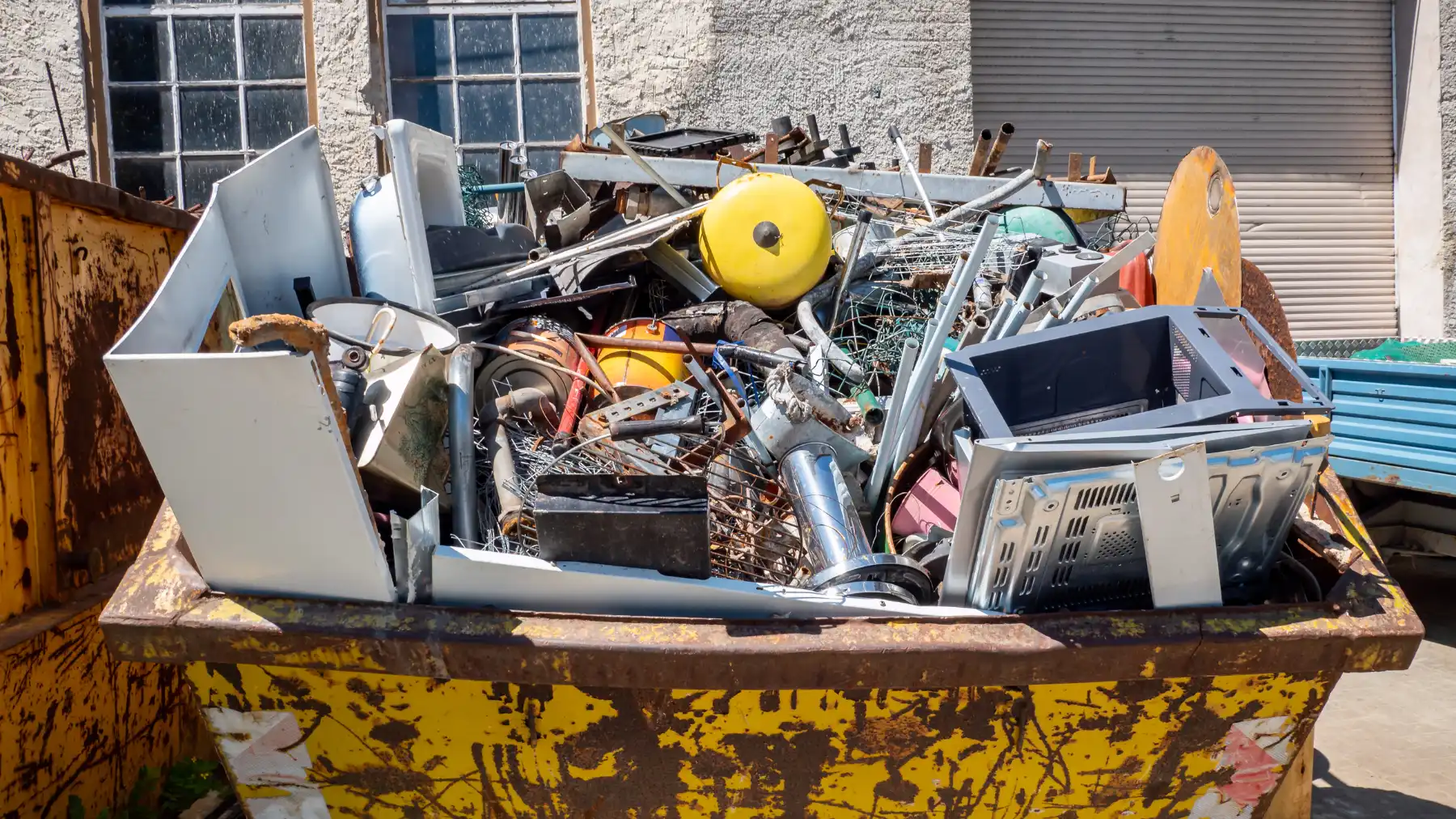
One of the most common causes of a rejected load or a delayed pickup is prohibited material in a scrap metal container. It usually isn't intentional; someone throws in an old propane tank, a piece of equipment that still has oil in it, or an appliance that once contained refrigerant, and what should have been a routine pickup becomes a problem.
Understanding what belongs in a recycling scrap bin, what doesn't, and what requires preparation before it can be accepted saves time, avoids fees, and keeps your recycling program running without interruption. Here's a clear breakdown based on IMI's actual materials policies.
Iron & Metals accepts a wide range of ferrous and non-ferrous metals from both drop-off customers and commercial container accounts.
Ferrous metals include iron, steel, cast iron, and structural steel in most forms — pipe, plate, beam, rebar, sheet, hardware, and equipment components.
Non-ferrous metals include aluminum, copper, brass, lead, zinc, nickel, stainless steel, titanium, and tungsten, as well as specialty alloys including Hastelloy, Inconel, Invar, Monel, and Zeron.
Other accepted materials include computer wire, car batteries, electric motors and stators, and most standard appliances that do not contain refrigerant like stoves, washers, dryers, dishwashers, and water heaters.
Vehicles are accepted, including cars, trucks, SUVs, and vans, with proper ownership documentation.
Electronic waste including computer towers, cell phones, and printers are accepted. Computer monitors and televisions are not currently accepted.
Certain materials are prohibited outright, regardless of how they're presented. These exclusions exist for safety, environmental compliance, and regulatory reasons.
Some materials fall between a clean yes and a firm no. They're accepted under specific conditions, and knowing those conditions upfront prevents a wasted trip.
Used barrels are accepted if hazardous material labels have been removed. Barrels that are whole, uncrushed, and have the top removed are accepted if they've been triple-rinsed and certified empty. Barrels that don't meet these conditions won't be taken.
Machines, engines, and equipment that had oil, fuel, or hydraulic fluid must be fully drained before drop-off or container pickup. A machine that still has fluid in it creates a contamination risk for the load and the container. Drain it completely and allow it to sit before loading.
Vehicles are accepted with proper ownership documentation. If you're bringing in a vehicle for recycling, have title or proof of ownership ready.
It's worth understanding why these restrictions exist rather than treating them as arbitrary rules.
Prohibited materials in a scrap container can contaminate an entire load, resulting in rejected pickups, additional handling costs, and delays that affect other accounts. For hazardous materials specifically, improper disposal creates regulatory exposure for both the person who loaded the container and the recycler who accepted it. In some cases, knowingly disposing of regulated materials through improper channels carries legal liability.
For commercial accounts with container programs, a single load rejection due to prohibited material can set back a project timeline and create friction in a service relationship that otherwise runs smoothly. The few minutes it takes to review what goes in the bin before a new crew starts loading is time well spent.
Before material goes into a recycling scrap bin, a quick review helps prevent issues at pickup or drop-off:
If you're not sure whether a specific item is accepted, the straightforward answer is to ask before it goes in the bin. Iron & Metals is happy to answer questions about specific materials before a drop-off or pickup — a quick call saves everyone time.
Reach us at (303) 292-5555 or review the full policies page before your next load. Drop-off hours are Monday through Friday, 8am to 4pm, at 5555 Franklin St in Denver.