Choosing a scrap metal recycler is a business decision, and like any business decision, it deserves more than a quick price check. For commercial and industrial operations — contractors, manufacturers, machine shops, utilities, fabricators, and everyone in between — the recycler you work with affects more than just your scrap revenue. It affects job site logistics, billing clarity, compliance documentation, and how smoothly material moves out of your facility.
The right questions upfront save a lot of frustration later. Here's what to ask, and why each category matters.
Scrap metal prices are tied to commodity markets and fluctuate regularly. A good recycler prices material based on current market rates — not a fixed internal schedule that lags behind actual conditions. Ask whether pricing is updated daily, weekly, or on some other cycle, and whether you'll be informed of significant changes before you bring in a load.
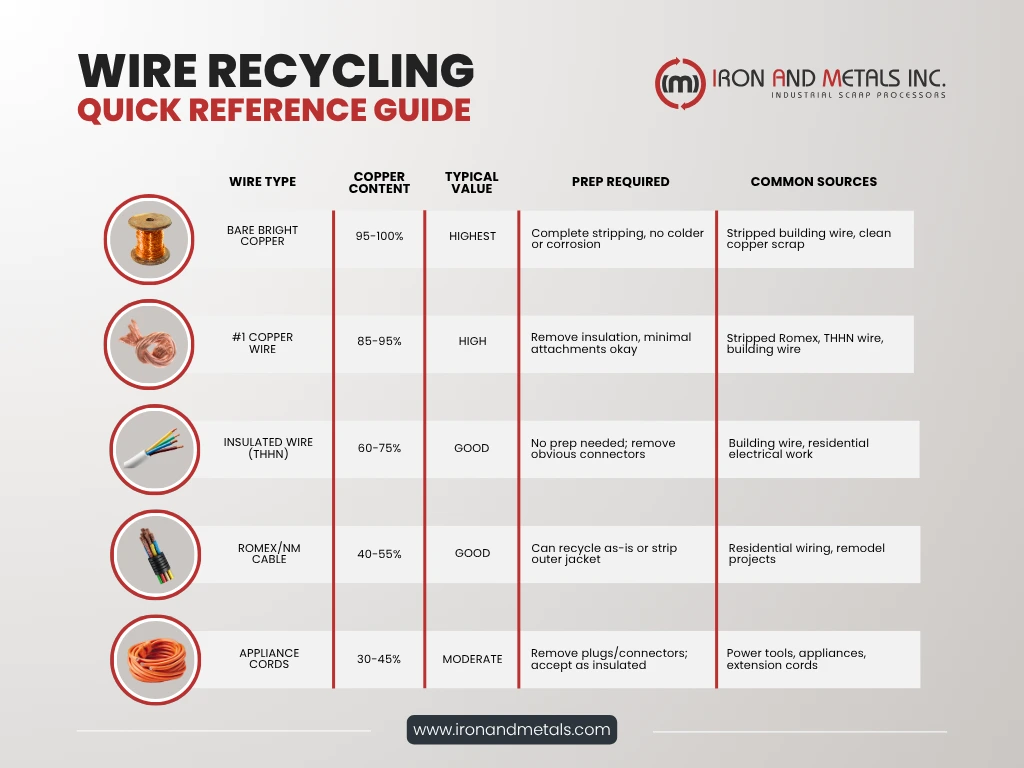
This matters especially for high-value metals like copper, aluminum, and stainless steel, where grade distinctions significantly affect the price per pound. Bare bright copper, #1 copper, #2 copper, and insulated wire are all priced differently. The same applies to aluminum alloys, steel grades, and specialty metals like titanium or brass. A recycler who can clearly explain their grading scale — and show you where your material lands — is one you can trust.
Some recyclers apply processing fees, contamination deductions, or other adjustments that aren't mentioned until settlement. Ask directly whether the quoted price is what you'll receive, or whether there are conditions that could reduce it. Transparent recyclers have straightforward answers to this question.
Grading is where the real value is determined, and it's worth understanding how a recycler does it. Ask whether grading is done by trained staff, whether you can be present during the process, and how disputes are handled if you disagree with a classification. For specialty metals like aerospace alloys, high-temp materials, and titanium, ask specifically about their experience grading those materials, since misclassification can mean a significant price difference.
For operations that generate scrap across multiple metal types like machining shops, HVAC contractors, electrical crews, and construction teams, loads don't always arrive perfectly sorted. Ask how the recycler handles mixed material: do they sort it and pay by grade, or does everything get downgraded to the lowest-value component? The answer tells you a lot about how they operate and whether it's worth separating material on your end before delivery.
For any commercial operation generating ongoing scrap volume, drop-off trips for individual loads get inefficient quickly. Ask what container sizes are available, what types of trucks and trailers they run, and how pickup scheduling works. A recycler with a wide range of container options — from small luggers to full roll-off containers and flatbed trailers — can fit into more job site configurations and adapt as your volume changes.
This is especially relevant for contractors in construction, demolition, plumbing, and electrical work, where job site access and space constraints vary significantly from project to project.
If your operation depends on regular material removal to keep job sites clear or production floors organized, turnaround time matters. Ask about typical lead times for container placement and pickup, and whether they can accommodate urgent requests during busy periods.
Payment timing and method vary by recycler. Some pay on the spot at drop-off; others issue checks on a scheduled cycle. For smaller operations and individuals, same-day payment is often expected. For larger commercial accounts, net payment terms may apply. Either way, know what to expect before your first transaction.
A proper settlement receipt should show the material type, weight, grade, price per pound, and total payment. This documentation matters for internal accounting, project closeout records, and in some cases regulatory compliance. If a recycler can't provide clear, itemized settlement documentation, that's worth noting.
Certified scale weights aren't just a formality, they're the foundation of a fair transaction. Ask whether the facility's scales are regularly inspected and certified by the applicable state or local authority. In Colorado, certified commercial scales are required for legal-for-trade transactions.
This question is increasingly relevant for manufacturers, municipal operations, wastewater facilities, and aerospace and defense contractors who need to document material disposal as part of environmental compliance or internal sustainability reporting. A recycler with organized recordkeeping can provide the documentation you need. One without it can create headaches during audits or project closeouts.
Some metals require specific handling knowledge to grade and process correctly. High-temp alloys from aerospace operations, titanium from machining and medical manufacturing, specialty stainless from industrial finishing, and insulated wire from utility and telecom work all have nuances that a generalist recycler may not handle well. Ask directly whether they have experience with your specific material types and what their process looks like.
A recycler worth working with will answer these questions directly, without deflection or vague commitments. They'll be able to explain their pricing, walk you through their grading process, describe their container service clearly, and provide documentation without treating it as an unusual request.
What you're looking for isn't perfection on every point but honesty, consistency, and a clear sense that they understand your operation and take the transaction seriously.
Individual scrap drop-offs are relatively low-stakes. If a transaction doesn't go well, the cost is small and the fix is easy.
For commercial and industrial customers like oil and gas operators managing pipe and equipment scrap, manufacturers running high-volume stamping lines, contractors coordinating material removal across multiple active job sites, the stakes are different. The recycler you choose becomes part of your operational infrastructure. Reliability, fair pricing, and clear communication aren't just nice to have; they affect your margins and your schedule.
Asking the right questions before you commit is how you find a partner rather than just a buyer.
Iron & Metals has been working with Colorado contractors, manufacturers, and industrial operators since 1961. We accept a wide range of ferrous and non-ferrous metals including copper, aluminum, brass, stainless steel, titanium, cast iron, high-temp alloys, and insulated wire. We're built to serve commercial accounts with consistent volume and specific logistics needs.
We offer certified scale weights, transparent market-based pricing, itemized settlement documentation, and container service with flexible sizing across the Denver metro area. If you have questions about how we handle a specific material or how our process works, we'd rather answer them upfront.
Reach out to our team or stop by our yard at 5555 Franklin St in Denver — Monday through Friday, 8am to 4pm — and we'll walk you through it.