If you've ever pulled up to a scrap yard with an old AC unit or refrigerator and been turned away, EPA certification is likely the reason. It's one of the more misunderstood requirements in scrap metal recycling — not because it's complicated, but because most people don't encounter it until they're standing at the scale with equipment they can't drop off.
Here's what EPA Section 608 certification actually covers, why refrigerant handling is regulated in the first place, and what contractors and commercial operators need to have in order to recycle HVAC and refrigeration equipment legally.
EPA Section 608 of the Clean Air Act regulates the handling of refrigerants — the chemical compounds used in air conditioning systems, refrigerators, heat pumps, and other cooling equipment. Common refrigerants like R-22, R-410A, and R-134a are classified as ozone-depleting substances or greenhouse gases, and their release into the atmosphere is tightly controlled under federal law.
Section 608 certification is the credential that authorizes technicians to purchase, handle, recover, and dispose of these refrigerants. It comes in four types based on the equipment category involved, with Type II covering high-pressure systems like most residential and commercial AC units, and Type III covering low-pressure systems. Universal certification covers all equipment types.
The certification isn't just a piece of paper, it's the legal basis for a technician or contractor to perform refrigerant recovery work and the documentation that scrap yards require before accepting equipment that once contained refrigerant.
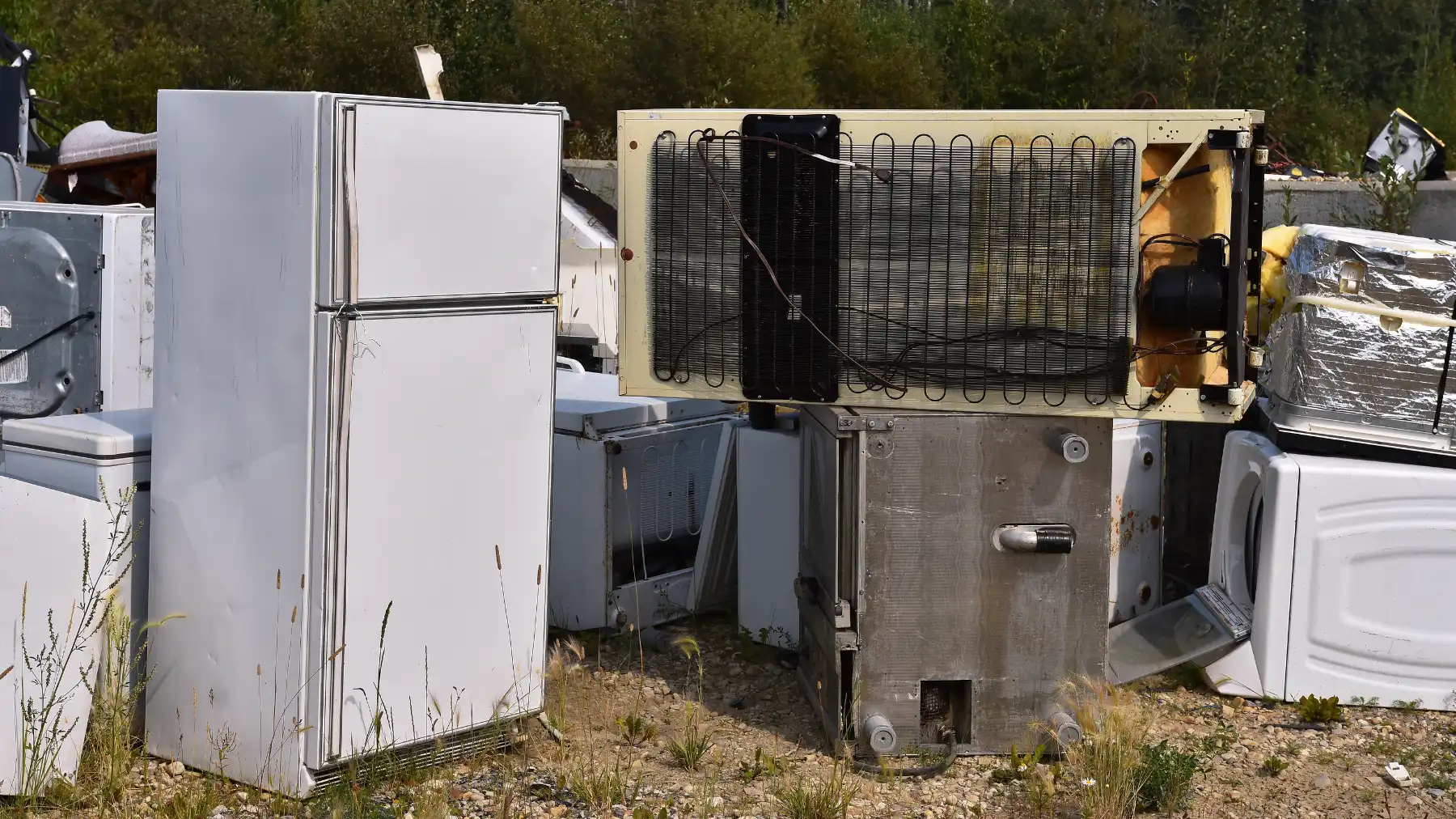
An AC unit or refrigerator that still contains refrigerant can't go into a scrap metal recycler's processing stream. When that equipment gets crushed, shredded, or cut apart, any remaining refrigerant is released directly into the atmosphere. Under EPA regulations, that release is a violation regardless of whether it was intentional.
Refrigerant recovery means evacuating the system and capturing the refrigerant using certified recovery equipment before the unit is disassembled or recycled. That recovered refrigerant can then be reclaimed, recertified, reused, or disposed of properly. Only after that evacuation is complete can the equipment be treated as scrap metal.
For licensed HVAC contractors, this process is routine. Section 608 certification is a standard credential in the trade, and refrigerant recovery is part of standard equipment changeout procedure. When a contractor pulls a rooftop unit, a split system, or commercial refrigeration equipment, proper refrigerant evacuation happens as part of the job and documentation of that evacuation is what gets the equipment through the gate at a scrap yard.
Commercial accounts dropping off AC units or refrigeration equipment at Iron & Metals need to provide certification of proper evacuation. This typically means documentation showing that a certified technician performed the refrigerant recovery using EPA-compliant equipment. Most contractors generate this paperwork as a matter of course. The same records that support regulatory compliance on the job also satisfy the scrap yard's requirement.
Without that documentation, units containing refrigerant won't be accepted. This isn't a policy unique to any one yard, it's a federal compliance requirement that applies across the industry.
Not all appliances are affected by Section 608 requirements. Equipment that never contained refrigerant — electric stoves, washers, dryers, water heaters, dishwashers — can be dropped off at most scrap yards without any special documentation. These appliances are accepted as ferrous metal scrap and priced accordingly.
Iron & Metals accepts most standard appliances including stoves, washers, dryers, and hot water heaters. AC units and refrigerators fall under the refrigerant policy described above and are only accepted from commercial accounts with proper evacuation documentation, not from general drop-off without certification.
No refrigerant — generally accepted as standard scrap:
Electric ranges and stoves, clothes washers and dryers, water heaters, dishwashers, and microwaves.
Contain or may contain refrigerant — require evacuation documentation:
Window and central AC units, refrigerators and freezers, dehumidifiers, heat pumps, commercial refrigeration cases, and water coolers with cooling functions.
When in doubt about a specific unit, a quick call before the trip saves the inconvenience of a turned-away load.
Can I just remove the refrigerant myself before dropping off a unit?
Not legally unless you hold Section 608 certification and use EPA-approved recovery equipment. Intentionally releasing refrigerant — venting it to the atmosphere — is a federal violation regardless of whether a certified technician is present. The recovery has to be performed correctly, not just completed.
What if the unit is old and the refrigerant has already leaked out?
A unit that has leaked refrigerant over time may have little or no refrigerant remaining, but demonstrating that to a scrap yard's satisfaction typically still requires documentation. If you're an HVAC contractor who can verify the system was empty at changeout, that notation in your service records is worth having.
I'm a homeowner with an old window unit. What should I do?
Homeowners who aren't certified technicians should contact a licensed HVAC contractor to perform refrigerant recovery before bringing a unit to a scrap yard. Some municipalities and utility companies also offer appliance recycling programs that handle refrigerant removal as part of the service.
Does this apply to commercial refrigeration equipment too?
Yes. Walk-in coolers, commercial refrigeration cases, ice machines with refrigerant circuits, and similar equipment all fall under Section 608 requirements. Commercial operators should coordinate with their HVAC or refrigeration service contractor to ensure proper documentation before scheduling scrap pickup or drop-off.
EPA Section 608 certification exists to prevent refrigerant from being released into the atmosphere during equipment disposal. For HVAC contractors and commercial operators, complying with it is a routine part of equipment changeout work. For everyone else, it means one extra step — finding a certified technician to handle refrigerant recovery — before a unit can be recycled as scrap metal.
Iron & Metals accepts refrigeration equipment and AC units from commercial accounts that can provide documentation of proper refrigerant evacuation. For everything else like standard appliances, equipment questions, or commercial container service, reach out to our team or stop by our yard for assistance.