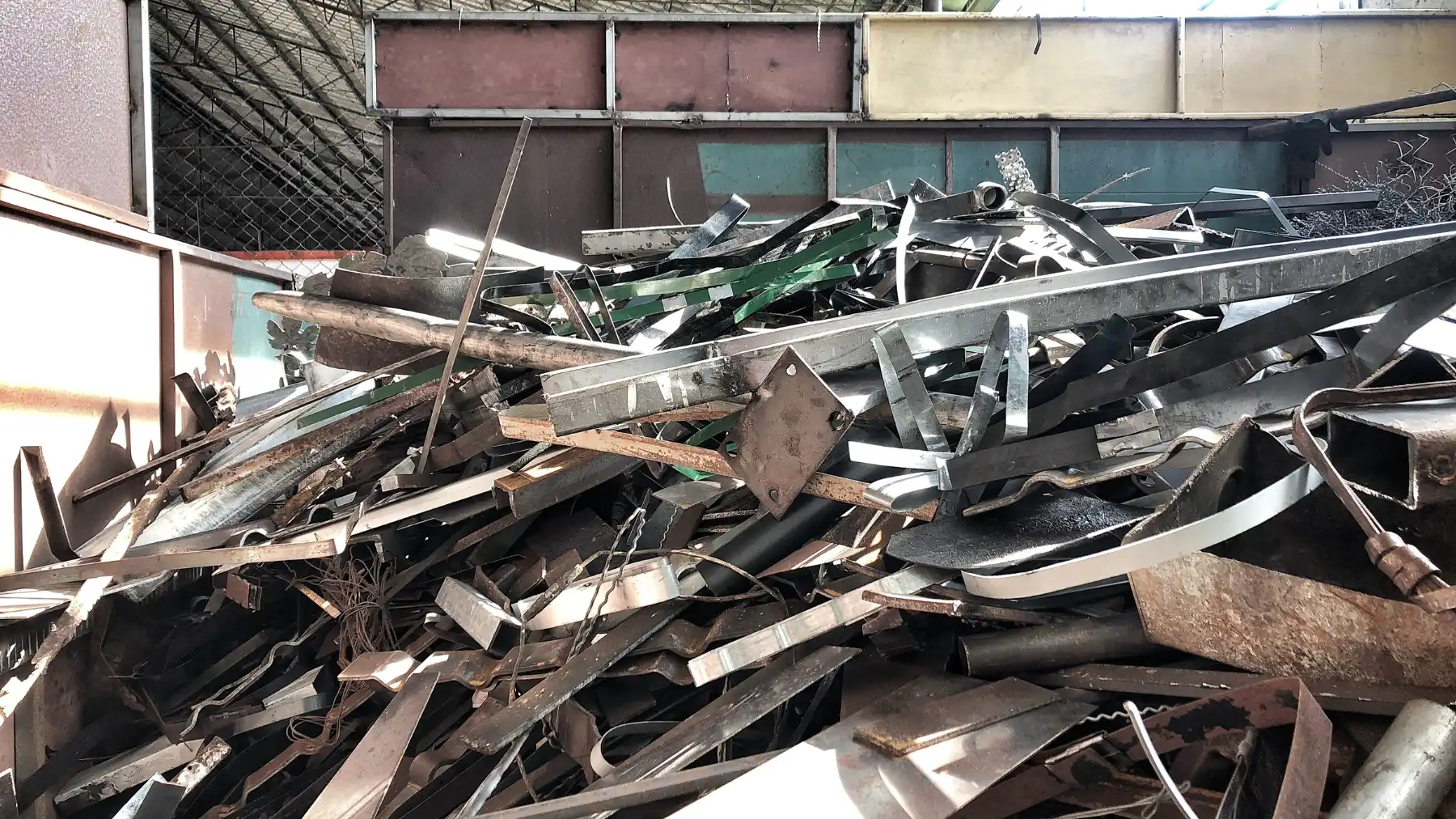
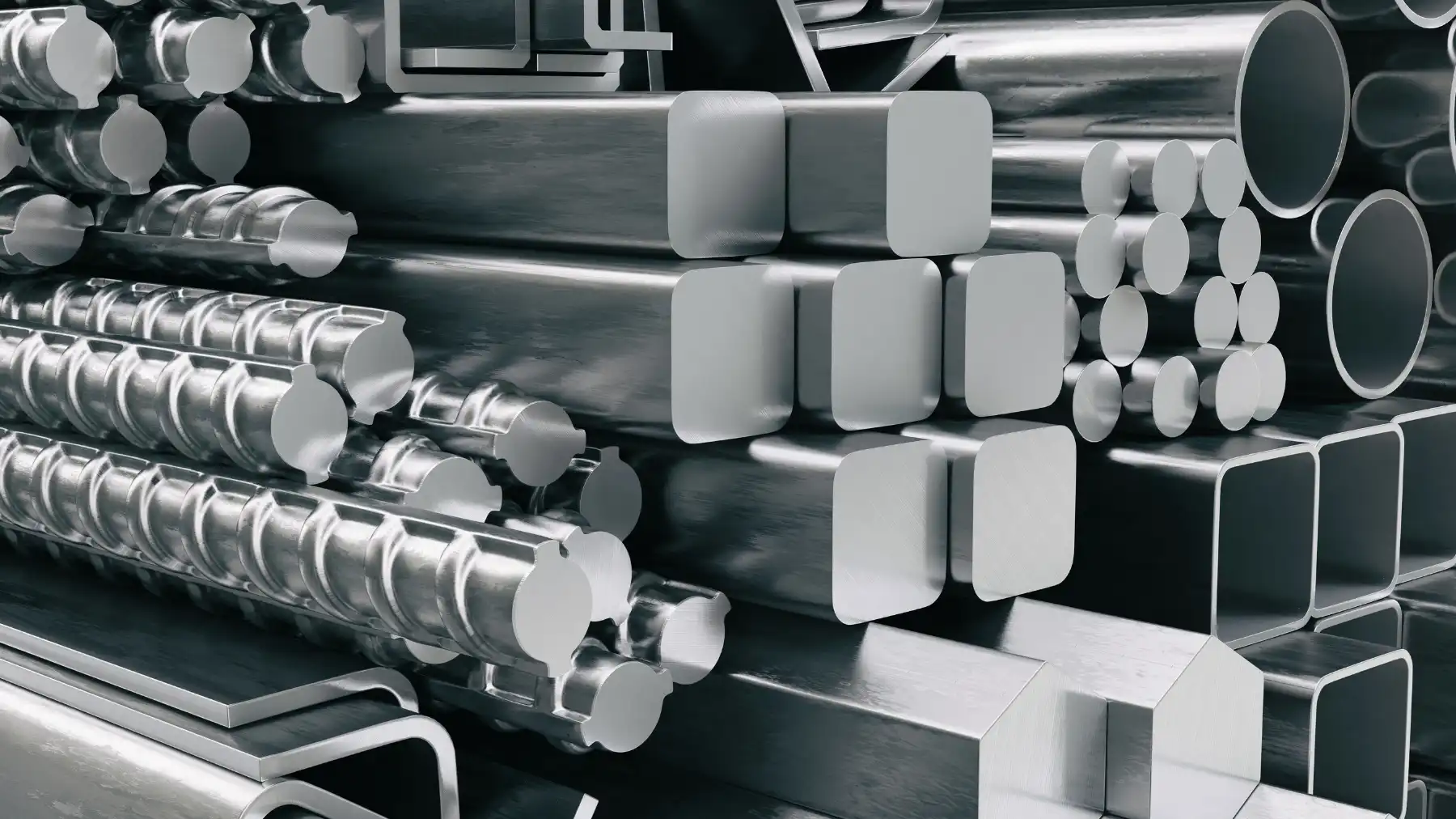
Carbon steel and stainless steel show up on the same job sites, come off the same equipment, and can look nearly identical to the untrained eye. At the recycling yard, though, they're not remotely the same material. They're priced differently, too.
Stainless steel scrap value consistently runs higher than carbon steel, sometimes significantly so, because of the alloy content it carries. Understanding why that is, how to tell the two apart in the field, and what affects the final price you receive helps contractors, fabricators, and industrial operators recover full value from the steel scrap they generate.
Both materials start with iron and carbon as their base, but stainless steel includes chromium (at least 10.5% by composition) along with varying amounts of nickel, molybdenum, and other alloying elements depending on the grade. That chromium content is what gives stainless steel its corrosion resistance and its distinctive appearance. It's also what makes it more valuable as scrap.
When stainless steel is recycled, those alloying elements, particularly nickel and molybdenum, are recovered along with the steel itself. Nickel in particular trades as a valuable commodity, and grades that contain more of it command higher scrap prices. Carbon steel, by contrast, contains minimal alloying additions and recycles primarily as iron and carbon. It's abundant, widely recycled, and priced accordingly.
Not all stainless steel is equal at the scale. The grade determines the alloy content, which determines the price.
304 stainless is the most common grade in commercial and industrial use like food processing equipment, kitchen fixtures, tanks, pipe, and structural components. It contains roughly 18% chromium and 8% nickel, making it a solid scrap value.
316 stainless adds 2–3% molybdenum to the mix, which improves corrosion resistance in chemical and marine environments. That additional alloy content pushes 316 scrap value higher than 304.
409 and 430 stainless are ferritic grades with lower nickel content, commonly found in automotive exhaust systems and some industrial equipment. Their scrap value is lower than 304 or 316 but still higher than carbon steel.
Carbon steel grades like mild steel, A36, structural tube, and pipe, price out well below any stainless grade. The gap between carbon steel and 304 stainless scrap pricing is typically substantial, which is exactly why keeping them separated matters.
The most reliable field test is a magnet. Austenitic stainless grades (304 and 316, the most common and most valuable) are non-magnetic or only slightly magnetic. Carbon steel is strongly magnetic. This distinction makes sorting relatively straightforward on most jobs.
A few caveats worth knowing: some stainless grades, including 409 and 430, are magnetic, so a magnetic response doesn't automatically mean carbon steel. Cold-worked 304 can also develop slight magnetism. When in doubt, especially with high-value material, set it aside for the recycler to test rather than assuming it's carbon steel and pricing it that way.
Visual inspection also helps. Stainless typically has a brighter, more uniform surface finish than carbon steel, which tends to show mill scale, rust, or a duller gray appearance. On equipment or pipe that's been in service, stainless will usually show far less surface corrosion than carbon steel of similar age.
Grade is the primary driver of stainless steel scrap value, but a few other factors consistently affect what you'll receive.
Stainless steel mixed with carbon steel, aluminum, or other metals gets downgraded or rejected. A load that starts as clean 304 can end up priced as mixed or low-grade stainless if it arrives contaminated. This is one of the more common and avoidable ways industrial and fabrication operations lose value on what should be high-returning material.
Dedicated containers for stainless scrap, clearly labeled and kept away from general steel bins, are the most effective prevention. For facilities generating both 304 and 316, keeping those grades separate when feasible adds another layer of value recovery.
Stainless steel scrap comes in many forms including sheet drops, pipe, bar, turnings, and fabricated parts. Most are accepted and graded similarly as long as they're reasonably clean and uncontaminated. Turnings and fine chips may be priced slightly differently than solid material due to processing requirements, but they're worth collecting rather than discarding.
Excessive oil, coolant, or non-metallic attachments can affect how a load is graded. Clean material, or material that's been allowed to drain, consistently grades better than wet or contaminated loads.
The carbon vs. stainless distinction is relevant across a wide range of operations. Manufacturers running both carbon and stainless components need separation systems that keep those streams clean. Construction and mechanical contractors pulling mixed equipment need to know which pieces warrant extra handling before the load leaves the site. Food processing and pharmaceutical facilities, which use stainless almost exclusively, benefit from knowing exactly what grade they're generating and how it's classified.
In each case, the practical action is the same: identify what you have, keep it separated, and work with a recycler who grades it accurately.
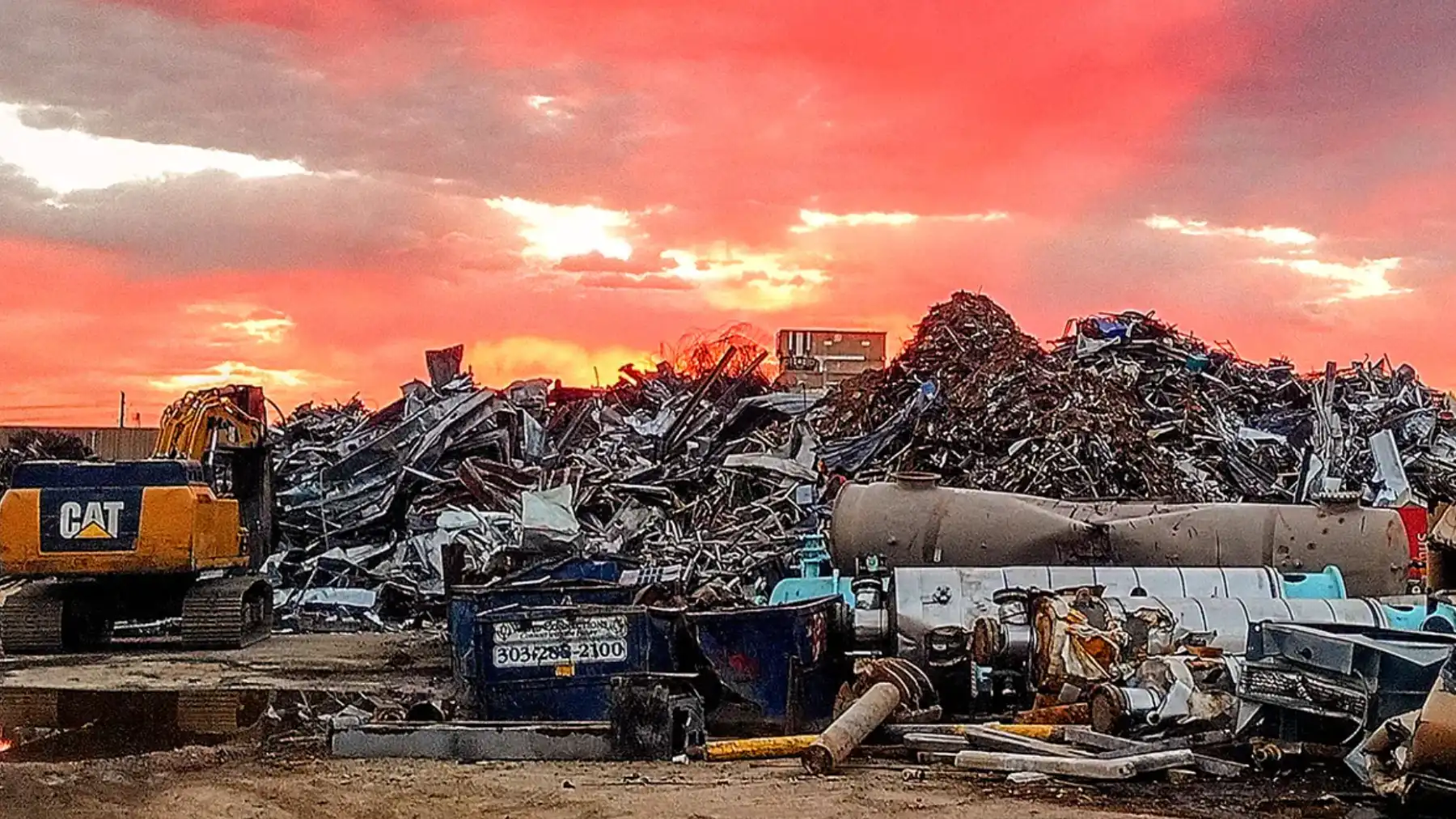
Iron & Metals accepts carbon steel, stainless steel in all common grades, and mixed steel scrap from commercial and industrial accounts across the Denver metro area. Our team grades material accurately including distinguishing between stainless grades where volume justifies it and prices everything against current market rates with certified scale weights.
If you're generating ongoing steel or stainless scrap and want a more efficient removal process, our container service is built for exactly that. Containers are placed at no cost, sized to your volume, and picked up on a schedule that works around your operation.
Contact us to get started or stop by our yard at 5555 Franklin St in Denver — Monday through Friday, 8am to 4pm.