Why C&D Recycling Matters

Implement a strong C&D recycling program on your next job site to cut cost, drive value, and support sustainability.
As a construction superintendent, you are the last line of defense and the first driver of efficiency on every project.

Proper scrap metal management often gets overlooked in the chaos of daily operations. What happens to scrap on your project directly impacts jobsite safety and schedules, waste management costs and project revenue, and environmental compliance.

Handled poorly, scrap metal becomes a liability. But when handled correctly, scrap metal becomes an asset.

With the right strategy, construction and demolition (C&D) recycling can reduce disposal costs, generate real revenue, and simplify compliance requirements on public and commercial projects.

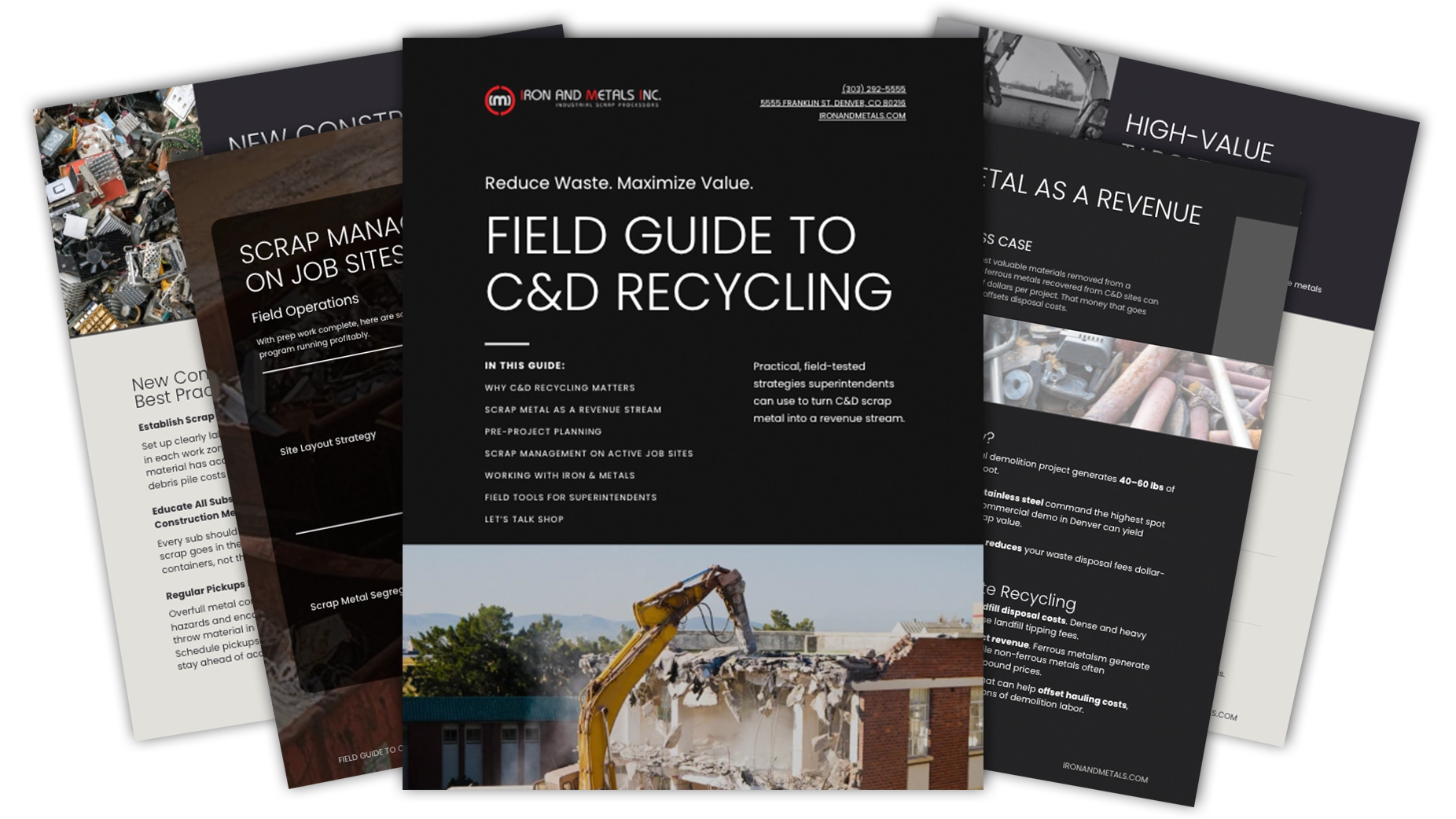
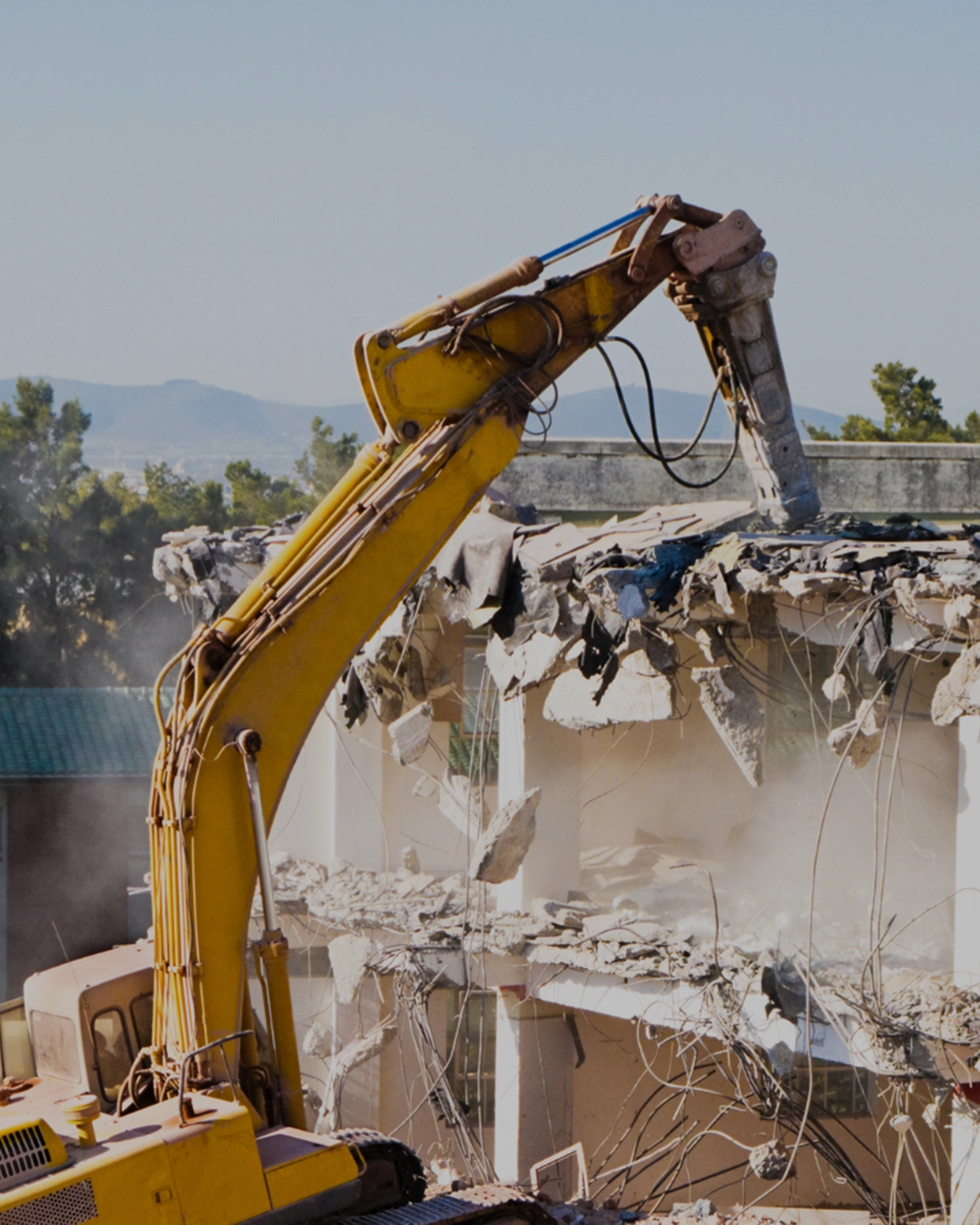
This guide is built specifically for supers who want practical, field-tested strategies to handle C&D scrap metal the right way: from first swing of the wrecking ball to final site closeout.

Iron and Metals has partnered with Colorado contractors for decades, and this guide distills that experience into a format you can put to work immediately.
Let’s dive in.
guide to c&d recycling
Did You Know?
The average commercial demolition project generates 40–60 lbs of scrap metal per square foot.

Copper, aluminum, and stainless steel command the highest spot prices. A single mid-size commercial demo in Denver can yield $50,000–$200,000+ in scrap value.

Diverting metal from landfill reduces your waste disposal fees dollar-for-dollar.
Benefits of Jobsite Recycling
C&D recycling reduces landfill disposal costs. Dense and heavy metals dramatically increase landfill tipping fees.

Scrap metal generates direct revenue. Ferrous metalsm generate value based on tonnage, while non-ferrous metals often command much higher per-pound prices.

The result is a waste stream that can help offset hauling costs, container fees, and even portions of demolition labor.

Scrap Metal as a Revenue Stream

creating a business case
Scrap metal can be one of the most valuable materials removed from a construction site. Ferrous and non-ferrous metals recovered from C&D sites can generate hundreds of thousands of dollars per project. That money that goes directly back to your bottom line or offsets disposal costs.

What Counts as C&D Recycling

know your metals
Superintendents don’t need to be metallurgists, but knowing how to recognize valuable metals on site makes a major difference in how effectively materials are recovered.

Ferrous vs Non Ferrous Metals

The simplest field identification method is the magnet test. Ferrous metals contain iron and are magnetic. Non-ferrous metals are not magnetic and are generally worth significantly more per pound.
Metal Type
Magnetic?
Common C&D Sources
Structural Steel
Yes
Beams, columns, decking
Rebar
Yes
Concrete demo, foundations
Cast Iron
Yes
Pipes, HVAC components
Copper
No
Wiring, plumbing, gutters
Aluminum
No
Siding, gutters, windows, ductwork
Stainless Steel
No (Usually)
Kitchen equipment, handrails
Brass
No
Valves, fittings, fixtures
Bronze
No
Bearings, bushings, gears

High-Value Targets on a Demo Project

know what to look for
During demolition, the most common recyclable metals include:
guide to C&D recycling
Electrical Systems
  • Copper wire and conduit (strip insulation to maximize value)
  • Bus bars & switchgear components
  • Transformer cores (coordinate with utility before removal)
Plumbing Systems
  • Copper supply lines & waste lines
  • Brass valves, backflow preventers, & fittings
  • Cast iron soil pipe (weigh separately from copper) 
Structural & Architectural
  • Wide-flange beams, HSS tubing, angle iron
  • Metal decking & roof panels
  • Aluminum curtain wall & storefront framing
  • Stainless steel kitchen equipment & counters
Mechanical Systems
  • HVAC units (refrigerant must be recovered FIRST by a certified tech)
  • Boilers & pressure vessels
  • Steel piping & ductwork
pre-project planning
The difference between a successful scrap program and a chaotic one is almost always determined before demolition begins.

Build the Scrap Strategy Early

Demo Audit Checklist
Walk all floors and mechanical rooms
Photograph and note location of copper, aluminum, and high-value items
Flag or mark areas with potential hazmat conflicts
Estimate tonnage by metal type (use building SF and age as proxies)

Identify items requiring specialist removal (transformers, refrigerant equipment)

Choosing Your Recycling Partner

Early coordination with a partner like Iron & Metals allows us to:

  • Provide containers/roll-off bins sized for your project
  • Establish pricing agreements (spot or contract) before market fluctuations
  • Schedule regular pickups so metal doesn’t accumulate and create safety/theft hazards
  • Advise on segregation requirements that maximize your payout

Scrap Management On Job Sites

field operations
With prep work complete, here are some daily and weekly practices that keep your scrap program running profitably.
Site Layout Strategy
Place containers as close as practical to primary demo areas to reduce carry distance

Separate ferrous and non-ferrous containers clearly — label and use different colors if possible

Never mix metal with general C&D debris — commingled loads pay less or nothing

Ensure container placement doesn’t obstruct emergency egress or fire lanes

On multi-story demos, stage containers to minimize vertical haul; use chutes where feasible
Scrap Metal
Segregation
The biggest driver of scrap revenue is segregation. A container of clean, segregated copper is worth 4–8x that of a container of mixed metal.

1 .Clean copper wire (stripped) → Highest payout
2. Clean copper wire (insulated) → High payout
3. Clean aluminum → High payout
4. Brass and bronze → High payout
5. Stainless steel → Medium-high payout
6. Clean structural steel / iron → Medium payout
7. Mixed metals (commingled) → Lowest payout or rejection

Download the full guide for more information! 

Don't miss other valuable info superintendents, project managers, and contractors can use to run a strong C&D recycling program including hazardous material considerations, an overview of the new Denver Bronco stadium and water relocation project, and additional tools that can be used in the field. 
Download Now

Colorado Regulatory & Compliance Framework

Metal recycling isn’t just about revenue. It’s increasingly a regulatory and contractual obligation. Understanding what you need to document and report protects everyone.

CDPHE Construction & Demo Debris Rules

The Colorado Department of Public Health and Environment regulates C&D debris disposal. Large projects in Denver metro may be subject to:

  • Waste management plan requirements at permit application
  • Mandatory diversion rate targets (varies by jurisdiction and project size)
  • Documentation requirements for waste manifests and recycling receipts

Denver Green Building Ordinance

Local jurisdictions have also implemented additional requirements. Denver’s Green Building Ordinance includes construction waste management provisions for many commercial developments. These projects often require documentation showing diversion rates and recycling totals.

Reporting & LEED Documentation

LEED v4 Construction Waste Management Credit
Projects pursuing LEED certification must also document waste diversion. LEED v4 awards points for recycling at least 50% of construction waste, with additional points for diverting 75% or more.

Proper scrap metal recycling is one of the easiest ways to meet these diversion goals because metals are widely recyclable and easy to track by weight. Certified weight tickets from recycling facilities help satisfy these reporting requirements and protect the superintendent if questions arise during audits or inspections.

Documentation and Reporting
Every transaction with Iron and Metals generates a weight ticket and a payment record.

Request:
  • Certified weight tickets for every load (required for LEED documentation)
  • Monthly summary reports for long-duration projects
  • Material-specific breakdowns when your project has reporting requirements
  • Recycling certificates for projects requiring formal diversion documentation
field guide to C&D recycling
Services Available:
Roll-off container supply and delivery in sizes from 10 to 40 yards

Flatbed and crane-equipped trucks for structural steel and heavy equipment

Locked and secured container options for high-value non-ferrous metals

Certified weight tickets for LEED and owner reporting

Flexible pickup scheduling including emergency same-day service

Project-specific pricing agreements for large-volume projects
Pricing
Scrap metal prices are commodity-driven and fluctuate daily based on global metal markets.

I&M considers several factors, including the verified weight, classification and quality of your haul, to offer fair, transparent pricing that reflects current market conditions while ensuring solid service value for superintendents and their crews.

Working With Iron & Metals, Inc.

Your colorado recycling partner
Iron and Metals isn’t just a scrap yard. On commercial and industrial C&D projects, your recycler is a project partner whose capabilities and responsiveness directly impact your schedule and bottom line.

Ready to Extract Major Value From Your Next Demo Project?

Scrap metal recycling is one of the simplest ways supers can improve jobsite efficiency, reduce waste costs, and support sustainability goals.
By planning early, separating materials properly, and coordinating with experienced recycling partners, construction teams can turn demolition waste into a valuable project resource.

I&M has supported Colorado construction projects for more than 60 years, providing reliable scrap recycling services for every project, large or small.

Call us to get started or to request a quote before your next big project.

Call for a FREE Quote!

Schedule a free consultation with the Iron and Metals team ahead of your next demo project

phone icon
(303) 292-5555

Download the Field Guide to C&D Recycling

Download NowC&D recycling guide download

Contact Us

Want I&M Insider industry updates and tips on scrap metal recycling? *
location icon

Our Location

5555 Franklin St, Denver, CO 80216
Easy access from the highways:
I-70, I-25, I-76, Hwy 270, Commerce City
hours icon

Business Hours

Receiving Hours:
Monday through Friday, 8am - 4pm
Business Hours:
Monday through Friday, 8am - 4:30pm
Saturday and Sunday, Closed
© 2024-2026, Iron and Metals Inc. All Rights Reserved
crossmenuarrow-up